
Around Dunster: the village landmarks
The Yarn Market, Gallox Bridge, the castle, St George's Church, the watermill and the Dolls Museum, and how to walk between them.
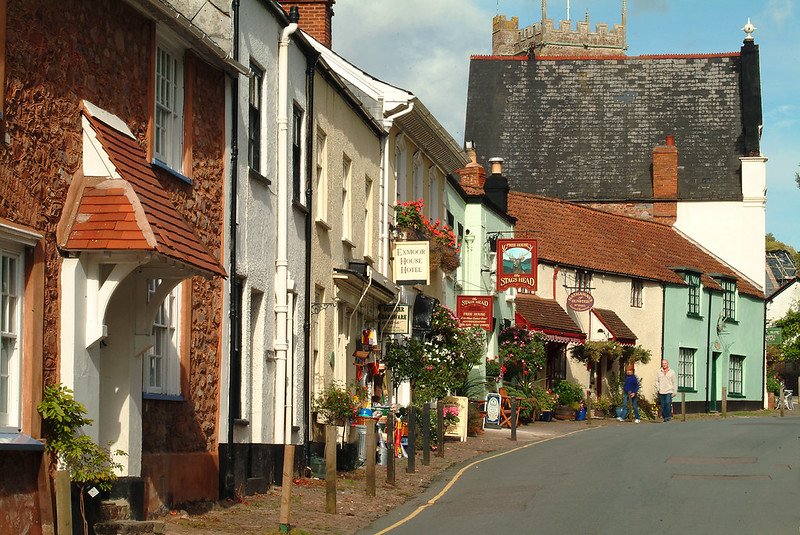
What to see
Most of Dunster's landmarks are within a few minutes of the Yarn Market. Here they are, roughly in walking order.
The Yarn Market
Start at the Yarn Market in the High Street, then use the landmarks below to plan your walk.
Gallox Bridge
Gallox Bridge is a 15th-century packhorse bridge with two arches over the River Avill, on the south edge of the village. It is a scheduled monument.
Dunster Castle and gardens
There has been a castle on the tor since Norman times. The 13th-century gatehouse still stands, and the castle survived two sieges, the last in the Civil War.
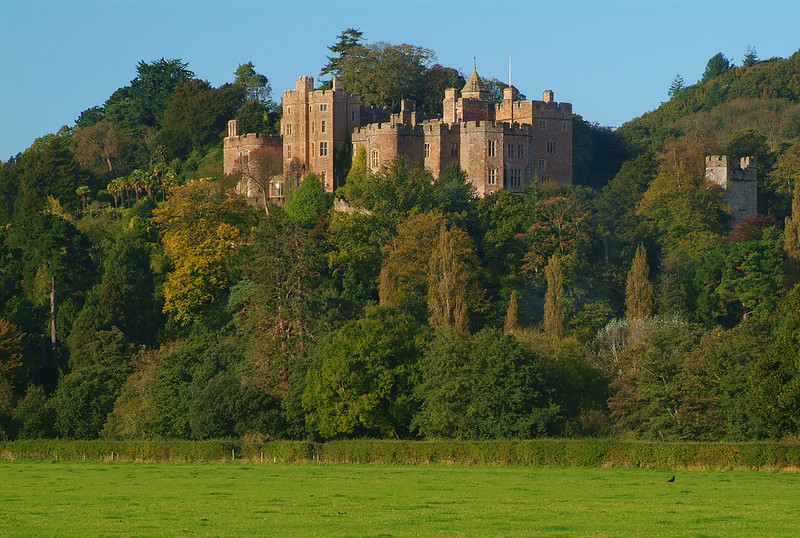
Inside the castle
Inside, look for the oak and elm staircase, the plaster ceilings and the 17th-century painted leather hangings.
The sheltered south terrace holds subtropical plants and the National Collection of strawberry trees. From the top there are views across the Bristol Channel to Wales.
Dunster Dolls Museum
Dunster's community museum houses a large doll collection. Mollie Hardwick started it in 1957, when ill health stopped her travelling.
It went on show in 1971 and now runs to hundreds of dolls from many periods and countries.
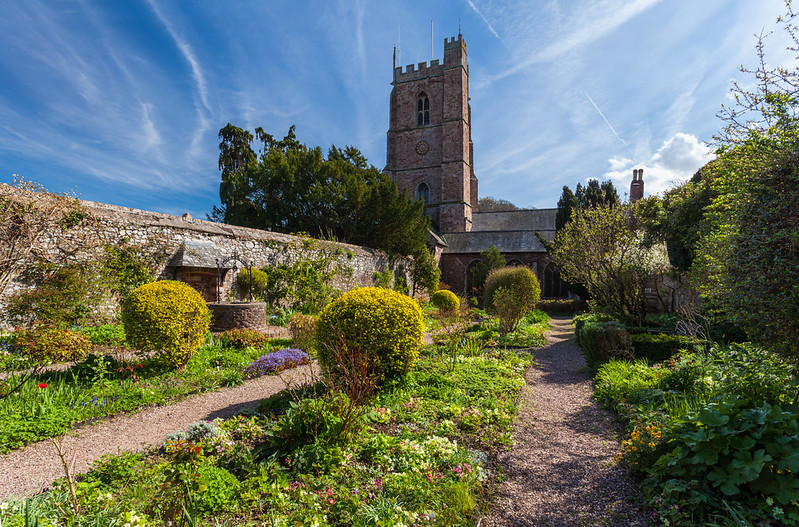
St George’s Church
Check St George's visitor arrangements before planning a look inside.
Dunster Water Mill
There was a mill here at Domesday, in 1086. The present mill is run by the National Trust. Check whether it is milling on the day you visit.
Visit the mill →Plan your visit
Opening arrangements, timetables and event programmes can change. Check your actual visit date with the operator.
A village walk to plan
Use the Yarn Market, St George’s Church, watermill and Gallox Bridge as points to plan a history walk. Check the route and each site’s visitor arrangements first.
For the stories behind the castle, church and cloth trade, read the village history.